
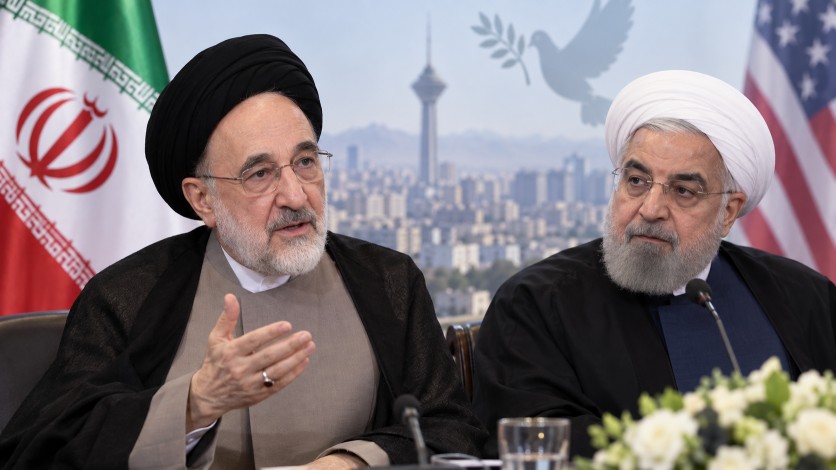
Former Iranian presidents Mohammad Khatami and Hassan Rouhani have called for a cessation of hostilities with the United States, advocating for a resolution characterized by “honourable” or “dignified” peace. This stance challenges the prevailing hardline rhetoric that has dominated Iran’s approach to the longstanding conflict. Rouhani has taken his appeal a step further by suggesting that the Iranian populace should be involved in the decision-making process regarding the continuation of the nation’s current confrontational stance against major global powers, especially if public support for such a policy wanes.
Khatami has echoed this sentiment, cautioning against ruling the country through the lens of perpetual wartime mentality. He has expressed support for balanced diplomacy and negotiations, arguing that Iran’s enduring national interests should supersede any impulses toward sustained confrontation. These statements have sparked a backlash from Iranian hardliners, with conservative media outlets accusing the former presidents of advocating surrender. Furthermore, loyalist rallies have featured chants opposing any form of compromise, and the editor of the hardline newspaper Kayhan has called for investigations into Khatami and Rouhani.
The timing of these debates is significant as Iran grapples with increasing economic pressures. Escalating fuel costs and diminished oil revenues are compounding the country’s economic challenges, while the situation in the Strait of Hormuz continues to pose a critical risk to global energy markets. Meanwhile, Iranian officials have maintained a stringent public posture, cautioning that Tehran may adopt a more aggressive military approach if diplomatic efforts with Washington do not yield favorable results. This has raised concerns about potential further escalation as opposed to immediate concessions.
Despite these tensions, there are indications of ongoing regional diplomatic engagements. Notably, Saudi Arabia and Iran have continued to engage in dialogue concerning regional tensions, with senior officials discussing strategies to prevent further conflict and enhance stability. These developments underscore a growing divide between advocates of diplomacy and proponents of continued resistance. While former leaders press for negotiations and increased public consultation, the current Iranian leadership persists in warning of military escalation should their demands remain unaddressed.