
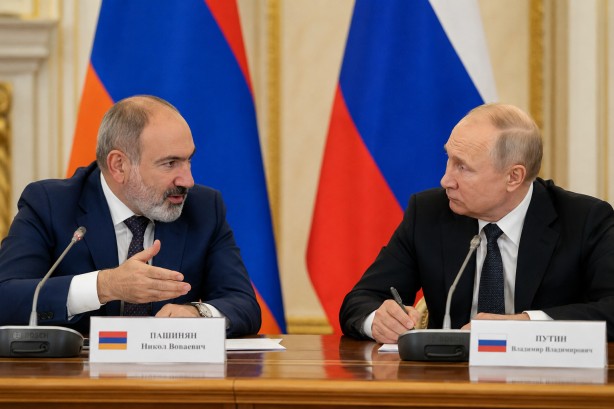
Armenian Prime Minister Nikol Pashinyan has called on Russian President Vladimir Putin to address and resolve trade restrictions that Russia has placed on exports from Armenia. During a recent phone conversation, Pashinyan highlighted that these trade barriers are in violation of bilateral agreements and contradict the regulations of the Eurasian Economic Union (EAEU), an organization to which both nations belong. He conveyed Armenia’s readiness to engage in dialogue to settle the dispute and urged Moscow to take measures to rectify the situation.
The trade tensions have emerged amid a period of strained relations between Armenia and Russia, as Armenia continues to strengthen its ties with Western countries. In a move that has exacerbated tensions, Russia last month imposed temporary restrictions on the importation of several Armenian goods, including fruits, vegetables, flowers, fish, and alcoholic beverages. These restrictions have sparked concern in Armenia, which is seeking to maintain stable trade relations with its larger neighbor.
The broader context of this trade dispute involves Armenia’s foreign policy trajectory, which has been a point of contention between Yerevan and Moscow. Russia has previously cautioned that Armenia’s aspirations to join the European Union could have implications for its status within the EAEU. Despite these political differences, Russia continues to be Armenia’s largest trading partner and a crucial supplier of energy resources.
Prime Minister Pashinyan’s appeal to President Putin underscores the delicate balance Armenia is attempting to maintain as it navigates its foreign policy. The Armenian government remains committed to resolving the trade restrictions through diplomatic channels, emphasizing the importance of dialogue in addressing the disagreements.
As Armenia seeks to chart its own course in international relations while maintaining essential economic ties, the resolution of this trade dispute will be critical. The situation highlights the complex interplay of geopolitics and trade, with Armenia striving to uphold its commitments within the EAEU while also pursuing new opportunities with Western allies.