
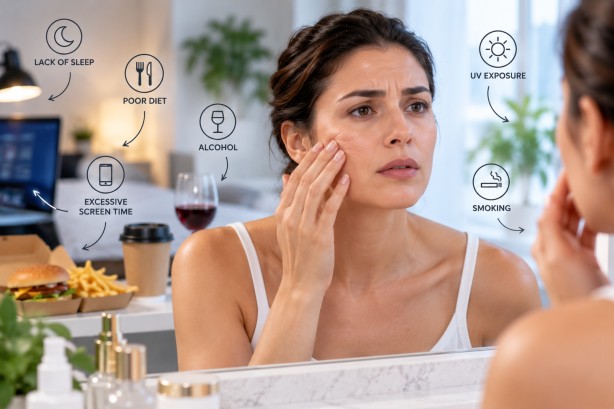
In the hustle and bustle of modern life, maintaining healthy skin can be challenging. Factors such as the extensive use of digital screens, hectic daily routines, stress, pollution, inadequate sleep, and poor dietary habits can all contribute to changes in the appearance and texture of your skin. While aging is inevitable, the choices we make every day can accelerate the emergence of issues like dullness, dryness, uneven skin tone, acne, and fine lines.
Digital devices have become integral to our lives, yet the hours spent on phones, laptops, and tablets can indirectly lead to skin problems. Although the sun is the primary source of UV exposure, excessive screen time can disrupt sleep patterns, encourage sedentary behavior, and contribute to late-night habits that negatively impact skin health. Taking regular breaks from screens, particularly before sleep, can promote healthier lifestyle practices.
Stress is another factor that can manifest on your skin. Persistent stress can trigger a range of skin issues, including breakouts, heightened sensitivity, dryness, and a fatigued appearance. Incorporating simple stress-relief techniques such as physical exercise, meditation, deep breathing exercises, engaging in hobbies, and detaching from work can help manage stress levels and, in turn, support healthier skin.
For those residing in urban environments, pollution presents a significant challenge. Exposure to dust, smoke, and various air pollutants can lead to oxidative stress, which over time, may dull or uneven your complexion. To counteract these effects, maintaining a clean face, minimizing exposure to polluted settings, and adhering to a straightforward skincare regimen can be beneficial.
Sleep is vital for skin health, with a regular sleep schedule being one of the simplest ways to enhance overall well-being. Chronic sleep deprivation can result in tired-looking skin, puffiness, dark circles, and a lackluster appearance. Achieving seven to eight hours of quality sleep and maintaining a consistent bedtime routine are crucial. Reducing late-night screen use can also facilitate better rest. Ultimately, everyday habits play a substantial role in skin health. Staying hydrated, consuming a balanced diet rich in fruits and vegetables, maintaining physical activity, and shielding skin from excessive sun exposure are essential. A basic skincare routine involving gentle cleansing, moisturizing, and sun protection can effectively maintain the skin’s barrier. Instead of solely relying on expensive skincare products, prioritizing sustainable habits that enhance overall well-being—such as improved sleep, regular activity, balanced nutrition, stress management, and sun protection—can significantly improve skin appearance over time.