
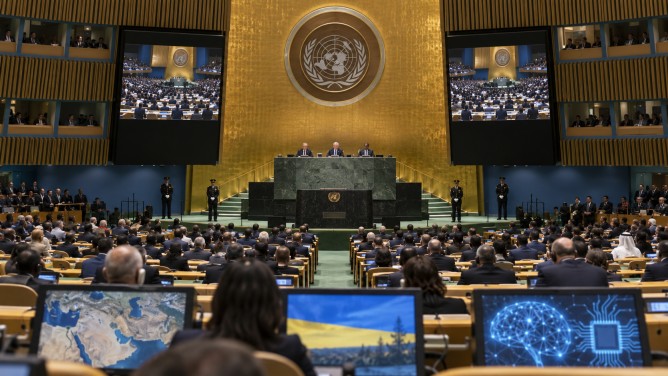
The convergence of global leaders in New York for the 81st United Nations General Assembly is set to have significant implications on pressing international issues, particularly the conflicts in the Middle East and Ukraine, alongside the evolving landscape of artificial intelligence. As these discussions unfold, their outcomes could shape international relations, energy security, and the development of AI governance.
Scheduled from September 22 to 26 and on September 28, the high-level general debate will see U.S. President Donald Trump address the assembly, with Ukrainian President Volodymyr Zelenskyy planning a diplomatic meeting with Trump. This session provides a critical platform for tackling the ongoing war in Ukraine, which continues to disrupt civilian life and strain global food and energy supplies. The presence of Russia as a permanent member of the UN Security Council further complicates efforts to address the conflict effectively.
The Middle East remains a focal point, with the Iranian conflict impacting regional stability and international diplomacy. Iranian President Masoud Pezeshkian and Israeli Prime Minister Benjamin Netanyahu are among the prominent figures expected to engage with the General Assembly, reflecting the geopolitical tensions and efforts towards regional peace.
Artificial intelligence is another major concern, as rapid advancements in AI technology prompt calls for international cooperation. UN Secretary-General António Guterres has emphasized the need for common safeguards, highlighting previous UN initiatives to establish an advisory body focused on AI governance.
Additionally, the United Nations faces internal challenges, including financial constraints and questions about its capability to effectively manage global crises. The U.S. recently fulfilled a $725 million payment towards its UN obligations, averting the risk of losing its voting rights, while simultaneously advocating for organizational reforms and budget reductions.
As Secretary-General Guterres approaches the end of his term in 2026, the leadership transition adds another layer to the discussions at the current General Assembly session. This gathering not only addresses immediate global conflicts but also sets the stage for future international cooperation and governance.