
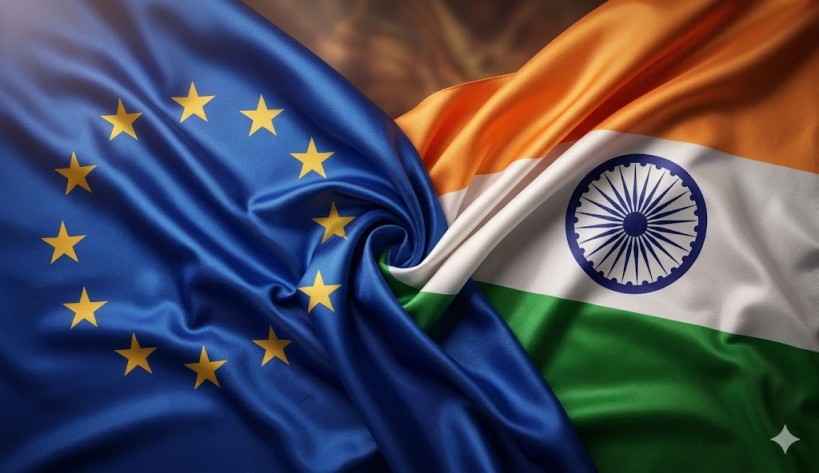
In a noteworthy advancement towards establishing one of the largest trade partnerships globally, India and the European Union have committed to expediting the completion of a Free Trade Agreement (FTA) by the end of this year. This significant development emerged from a trilateral meeting involving Indian Prime Minister Narendra Modi, European Council President António Costa, and European Commission President Ursula von der Leyen, held on the sidelines of the G7 Summit in Evian, France. The leaders outlined the agreement as an extensive framework encompassing goods, services, digital trade, investment, and technological cooperation.
The envisioned FTA aims to forge a vast free trade zone that would interconnect nearly two billion individuals and represent approximately a quarter of the global economic output. Additionally, both parties have signaled their intention to broaden collaboration in sectors such as defense, connectivity, and strategic infrastructure projects, notably including the India–Middle East–Europe Economic Corridor. This ambitious initiative underscores the commitment of both regions to enhance their economic integration in response to evolving global supply chains.
European Union leaders have noted the swift progress in negotiations since their conclusion earlier this year, with current efforts concentrated on finalizing the legal and technical specifics preceding the formal signing. This agreement is being heralded as a pivotal framework to deepen economic ties between India and Europe. As global supply chains undergo significant shifts, the partnership is seen as strategically valuable for bolstering economic and geopolitical stability.
Indian Prime Minister Narendra Modi emphasized the significance of stronger India–EU relations in fostering stability and inclusive growth. Meanwhile, European leaders highlighted the strategic importance of this partnership in navigating global economic and geopolitical challenges. The trilateral discussion also encompassed broader collaboration in trade and investment, as well as the examination of regional and global issues of mutual concern.
Officials from both India and the EU have expressed that the momentum for the FTA is robust, with expectations of continued high-level engagement in the coming months leading up to the anticipated signing. This ongoing dialogue reflects the commitment of both regions to not only solidify economic relations but also address broader strategic interests.